Nutmeg Oil
Myristica fragrans (Nutmeg Tree)
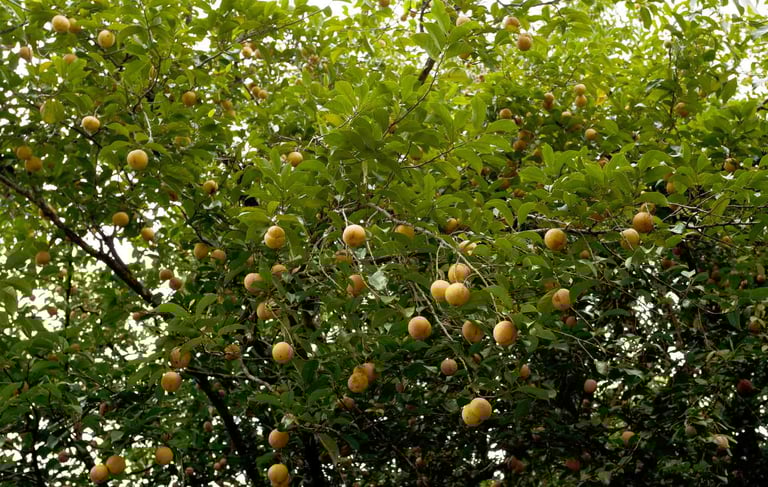
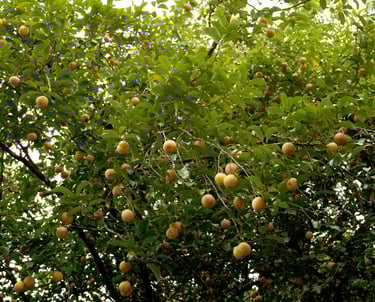
Nutmeg is derived from Myristica fragrans, an evergreen tree native to the Maluku Islands (Spice Islands) of Indonesia.
This tree produces both nutmeg (the seed) and mace (the aril around the seed), both of which are commercially important spices.
Botanical & Morphological Overview
The tree is typically dioecious (male and female flowers on separate plants).
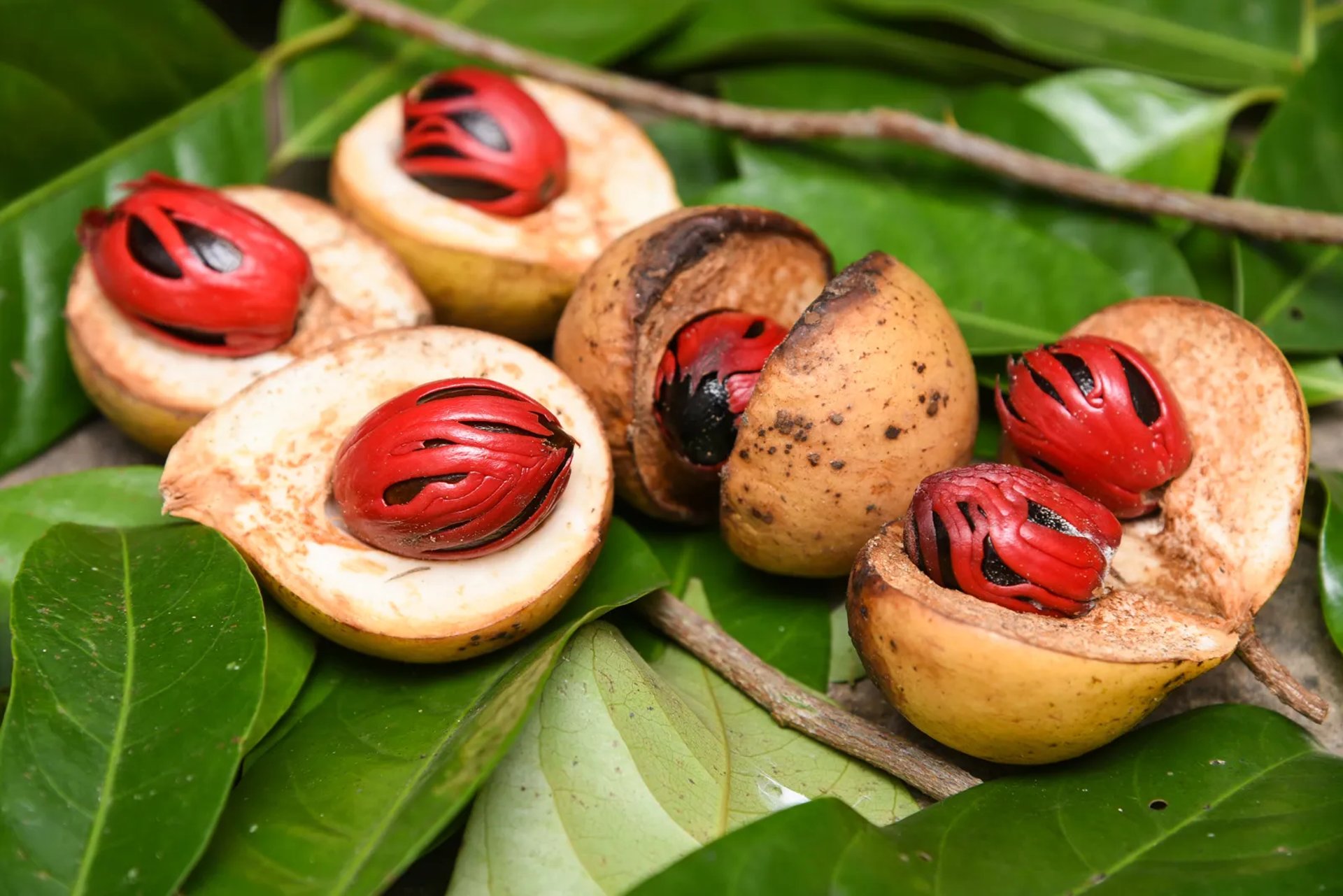
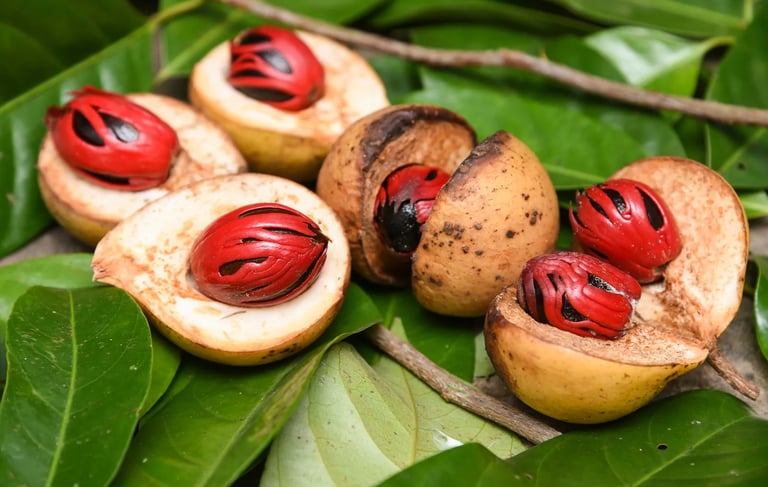
The fruit is pear-shaped, and when ripe the outer shell splits to reveal the seed (nutmeg) covered by a scarlet aril (mace).
The seed/kernal is the source of nutmeg spice and the raw material for nutmeg essential oil.
Nutmeg Essential Oil
Nutmeg essential oil is a volatile oil obtained by steam distillation of the ground seeds (kernels) of Myristica fragrans. The oil is typically colorless to pale yellow, with a warm, spicy-woody aroma.
Chemical composition includes terpene hydrocarbons (sabinene, α-pinene, β-pinene, limonene), and small amounts of phenolic/aromatic ethers (myristicin, elemicin, safrole).


Regions of Production
The nutmeg tree is indigenous to Indonesia (Maluku region) and is now cultivated in other tropical regions (Grenada, Sri Lanka, India). In Indonesia, nutmeg cultivation continues to have economic significance.
Uses & Benefits of Nutmeg Oil
Aromatherapy & topical uses
The warming aroma makes it popular in aromatherapy blends, creating a cozy, spicy ambiance.
When diluted and applied topically, it may help relieve muscular aches, joint discomfort, and digestive issues.
Digestive, pain & sleep support
It has been traditionally used to aid digestion and help with stomach discomfort.
Studies suggest nutmeg oil may have anti-inflammatory and analgesic effects (e.g., for rheumatic pain).
Some anecdotal/applicative uses include support for sleep quality via the calming scent.
Food, fragrance & industrial uses
Beyond aromatherapy, nutmeg oil is used as a flavoring ingredient in foods and beverages, as a dental product ingredient, and as a fragrance in cosmetics.
Safety & Precautions
Although helpful in many uses, nutmeg and nutmeg oil must be used with caution. Consumption in large amounts can cause serious side effects, including hallucinations, toxicity (due to compounds like myristicin).
For topical use: the oil should be diluted; avoid undiluted use on skin; avoid use by pregnant women without professional guidance.
Keep out of reach of children and use only small doses when ingesting spice forms.
Summary
In summary, the nutmeg tree, Myristica fragrans, yields both a beloved kitchen spice and a valuable essential oil with diverse uses. Nutmeg essential oil offers a warm, spicy scent and has applications in aromatherapy, topical wellness, food flavoring, and fragrance. Yet, as with many potent botanical oils, proper use and safety awareness are essential.